
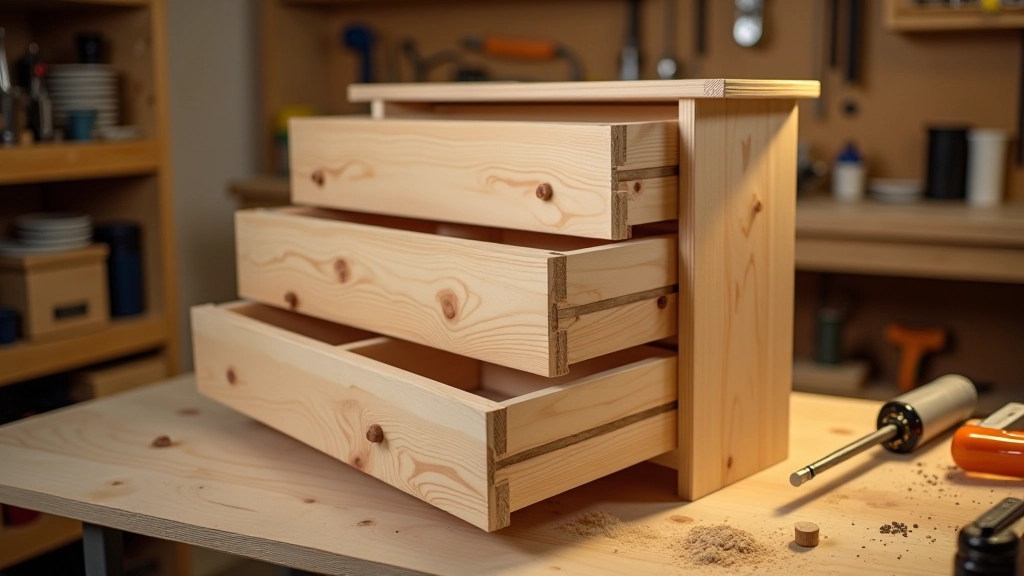
Why Joinery Matters in Drawer Construction
The joints you choose for your drawers determine everything. Strength, durability, appearance, time investment — it all comes down to which method you pick. You're not just joining wood; you're creating something that'll be opened and closed thousands of times over years.
We've built dozens of drawer units using all three methods, and we've seen which ones hold up under real use. It's not always about picking the "best" technique — it's about matching the method to your project, your tools, and your skill level.
Dovetail Joints: The Gold Standard
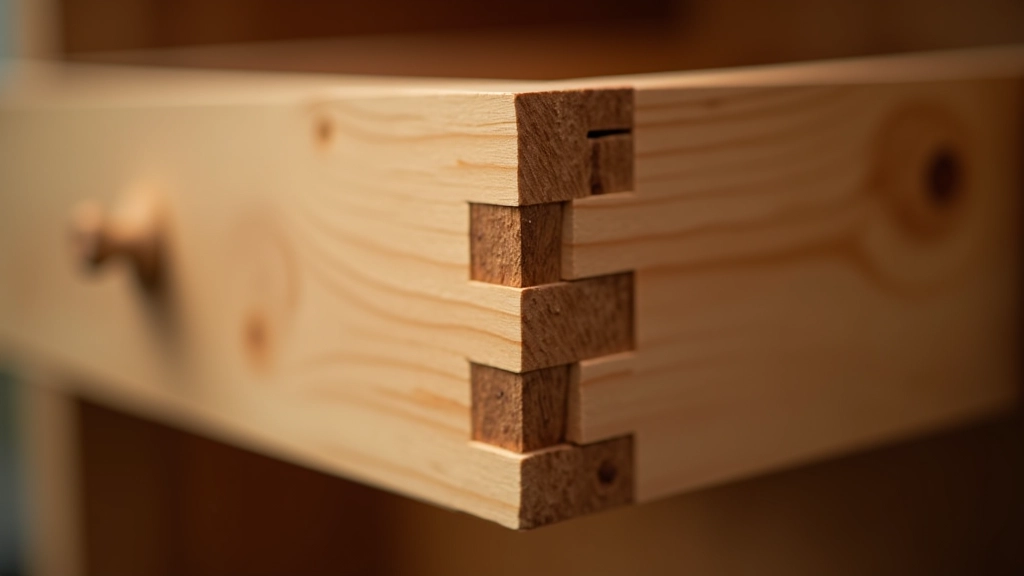
Dovetails are the classic choice, and they're classic for good reason. You're interlocking wedge-shaped tails and pins — it's mechanical strength without any glue dependency. Even if the glue fails (which it shouldn't), the joint holds.
The strength comes from the geometry itself. Those angled cuts mean the drawer sides literally can't pull apart. You'll see dovetails on quality furniture built 100 years ago that still function perfectly. That's longevity.
- Strongest option — mechanical strength independent of glue
- Beautiful visible joints on quality furniture
- Lasts for decades with proper technique
- No special equipment needed beyond basic hand tools
The catch? Time. Hand-cutting dovetails takes 45-60 minutes per drawer front if you're experienced. You need a saw, chisels, and genuine skill with both. First time doing them? Plan 2-3 hours. It's meditative work, but it demands focus.
Pocket Holes: Fast and Practical
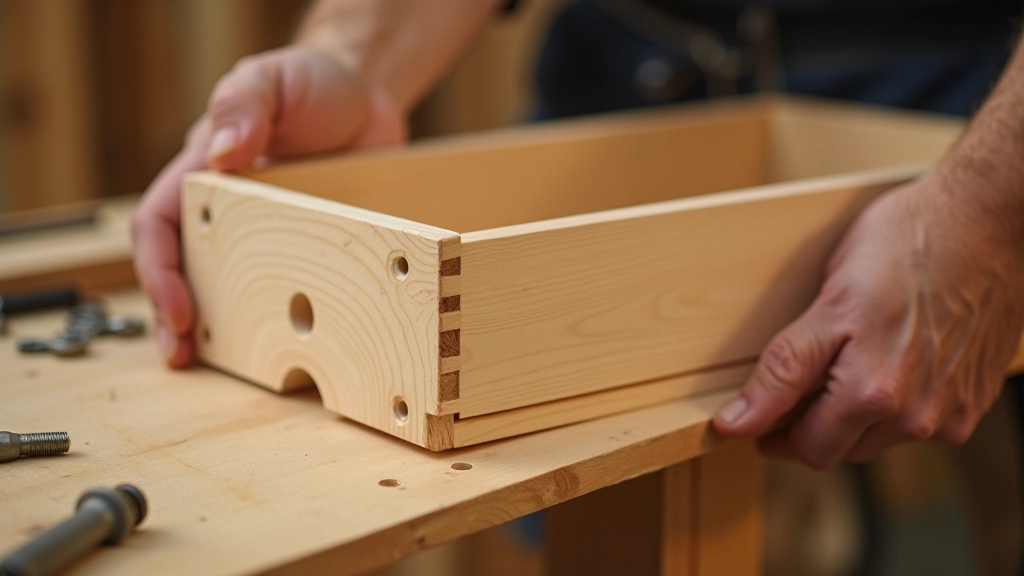
Pocket holes aren't glamorous, but they're reliable and you can complete a four-drawer unit in a single afternoon. You drill angled holes from the inside face, insert dowels with screws, and that's it. The joints are hidden once assembled, so aesthetics don't matter.
The strength is good — not as mechanically brilliant as dovetails, but solid enough for years of normal use. A pocket hole joint fails through glue breakdown or wood crushing around the hole, not through design flaw. We've seen kitchen cabinets with pocket-hole drawers that've survived 15+ years without issues.
- Fastest method — 10-15 minutes per drawer
- Minimal skill required, hard to mess up
- Pocket hole jig makes drilling consistent and accurate
- Perfect for painted or veneered drawers where joints are hidden
You'll need a pocket hole jig (Kreg Jig is standard) and a drill. Investment is maybe €50-80 for a basic jig. Once you have it, the method becomes repeatable. Every drawer is identical because the jig controls the angle and depth.
Box Joints: The Middle Ground
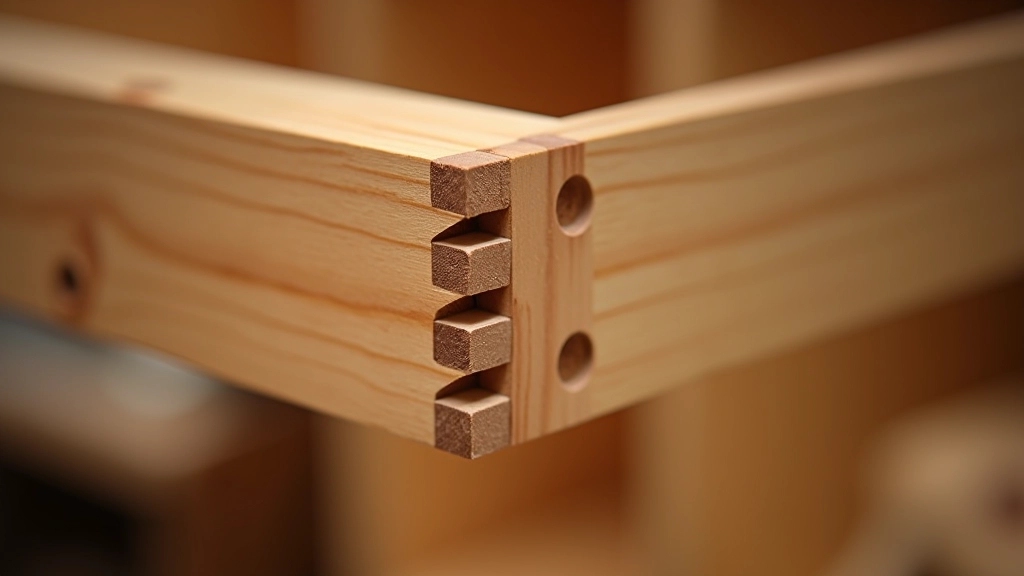
Box joints (sometimes called finger joints) sit between dovetails and pocket holes in terms of effort and appearance. You cut rectangular fingers that interlock — like fingers clasping together. The geometry provides real strength, and they look impressive without the complexity of dovetails.
You can see them on the finished drawer, so they're suited for natural wood finishes. They're also perfectly regular — which some people love for their geometric precision, others find less elegant than the varied angles of dovetails.
- Visible joints that look professional and geometric
- Strength comparable to dovetails
- Can be cut by hand or with a table saw + jig
- More consistent than hand-cut dovetails
Hand-cutting box joints takes 30-45 minutes once you understand the layout. A table saw jig speeds this to 15 minutes. The jig is simple to make — just a piece of hardwood with a key that guides your cuts. This is the method if you want visible joints that look handmade but aren't brutally time-consuming.
Direct Comparison: Which Should You Use?
For Your First Drawer
Start with pocket holes. Seriously. You'll complete a functional drawer in 20 minutes and learn the fundamentals without frustration. Once you've built three or four, then try box joints or dovetails.
For Furniture You'll Keep 20 Years
Dovetails. The time investment pays off when your drawer is still gliding smoothly in 2044. If you're making something to pass down, it's worth the 60 minutes per drawer.
For Painted or Hidden Joints
Pocket holes are your answer. They're invisible once assembled, incredibly fast, and strong enough for any drawer that won't be opened 50 times daily. Kitchen cabinets, bedroom furniture, storage units — pocket holes work.
For Visible, Impressive Joints
Box joints if you want something that looks handcrafted but isn't impossible. Dovetails if you want the most sophisticated appearance and have the time.
Woodworking Safety & Skill Note
The techniques described here are based on standard woodworking practices. Actual results depend on wood quality, glue choice, tool sharpness, and execution skill. Hand-tool joinery carries injury risk — always use proper technique, sharp tools, and appropriate safety equipment. If you're new to woodworking, consider taking a class or practicing on scrap wood first. Furniture durability depends on both joinery method and proper assembly technique including adequate glue coverage, correct clamping, and allowing sufficient drying time.
The Real Choice: Match Method to Project
There's no single "best" drawer joint. Dovetails aren't better than pocket holes — they're different. One is an investment of time for something beautiful and heirloom-quality. The other is pragmatic, fast, and perfectly adequate for everyday furniture.
Your choice should depend on what you're building, how visible the joints are, and how much time you want to invest. We've used all three methods on actual projects, and we'd recommend each for different situations.
Start where you are. Use the method that matches your current tools and experience. You can always upgrade to hand-cut dovetails once you've built enough experience to appreciate why they're worth the time.